
Since COVID shut Hollywood and the box office down, it has felt like the fate of movies and movie going was in question. The first few years were dismal at best, a few scattered hits but no rising tide to lift all boats. Then came the summer of Barbenheimer, and it felt like maybe movies had a chance to come back. 2024 seemed to sink the box office back into despair, and a less than record setting 2025 followed to cement that decline. And here we are in 2026 watching the box office rocket passed $5billion, with several major releases still on the way. It seems that movie going will survive, just not in the ways we clamored for it before. The age of the Movie Star is Over, the time of the Movie has come.

The Leading Man
The movie star has been dying for a long time. Originally you had men like Humphrey Bogart or Clark Cable who could sell a movie just by appearing on the poster. Stars were practiaclly owned by their studios and the formula for success was, well, formulaic. This was the age of dramatic leading men, one that gave way to the era of action and comedic leading men. Actors like Sean Connery, Harrison Ford, or Arnold Schwarzenegger who could sell an action movie because people knew and liked them. Or comedy legends like Steve Martin, Robin Williams, and Jim Carrey. The era of the movie star worked because there weren’t all that many ways to advertise a movie. To catch a trailer you had to see it in theaters or catch it between commercial breaks. A name and a face from another movie you liked was a good a metric as any that you might like this one. The Leading Man was a marketing tool created out of pragmatism for the era, not a universal concept to work across space and time. The Leading Man was a staple of the paper and analogue era, but a tool not quite prepared for the digital age.
The Phantom Menace

It is impossible to overstate how much the first trailer for The Phantom Menace broke the internet and audiences when it first hit screens in November 1998. People bought movie tickets just to watch the trailer and walk out. The fragile dial-up connections of many a home groaned all day as they downloaded that sweet two minutes of Star Wars from StarWars.com. While Star Wars was already a franchise by that point, it hand’t existed in a world that was ready to worship franchises like we do now. But in 1998, it was time for George Lucas’ creation to begin harvesting the soil it had tilled two decades prior.
The Phantom Menace was the first stone lobbed at the glasshouse of movie-going, and the mega franchises of the 2000s like Harry Potter, The Lord of the Rings, X-Men, and Spider-Man couldn’t have changed the way audiences choose what movies to flock to without it. As the 2000’s dragged on, it wasn’t the face of the actor that carried so much weight as the face of the main character. Audiences had greater access to trailers and promos as the internet grew, and a familiar face was not quite so effective as a story you already knew.
The Rock Metric

As the 2000s passed into the 2010s, there were few stars that seemed immune to this curse. Even surefire names like Tom Hanks, Tom Cruise, and Sylvester Stallone began to realize that their face wasn’t enough to sell a movie. But they were all of them deceived, for another movie star was made; Dwayne “The Rock” Johnson. For most of the 2010’s, audiences (especially in China) couldn’t help but smell what The Rock was cooking. Even his most poorly reviewed copy and paste action movies were pulling in numbers that competed with Marvel. Heck, we might not have ever even heard about Florence Pugh if it wasn’t for him.
The Rock seemed to make himself a household presence by sheer force of will. As more and more of the summer blockbuster season came to belong to Disney, The Rock was the one guy who seemed able to sell any movie if his bald head shined across its poster. He was the one inclination that maybe the idea of the movie star could live on. Then a bat infected something that infected a human and well, ya know, Covid.
The Franchise Age
The Franchise age began pre-Covid, but it was the only thing that seemed capable of holding on in the post-Covid world. We went nearly a year without any new theatrical releases by a major studio. When we did get new crops of content, it was really only the well-worn franchises that continued to land, or even hit. Amidst their more recent crop of dismally received flops, Marvel actually had a solid start with the MCU’s phase 4. Black Widow and Eternals just barely missed profitability, but Shangi-Chi and Spider-Man: No Way Home more than held their own.
As the world adapted to franchises releaseing at home and noticeable drops in quality, the once impermeable connection between a well-known franchise and dependable box office results began to waver. The Marvels flopped, Captain America: Brave New World flopped, Thunderbolts flopped. It became very apparent that people weren’t going to drag themselves to the theater to watch the same generic content they can stream for $10 a month at home. This year the first Star Wars movie in seven years released to so little critical and commercial acclaim you could easily be convinced it had never even come out. While these have hit Disney’s franchises especially hard, the same diminishing returns have also impacted Universal’s Fast and Furious and Warner Bros. DCEU and now DCU. Even The Rock, who had weathered the 2010s and finished on top, couldn’t swing a hit.
So it’s not the franchise age, but it’s also not the age of the leading man? Yes, well… except for one leading man.
Tom Cruise

The genuine, bonafide, true last champion of the movies. Tom Cruise has an ability to get a movie going that has neither belonged to one star for so long or so impactfully. Without Tom Cruise it is very likely movie production could have stalled an additional year after the pandemic. It was his gaslighting of the studios on set of Top Gun: Maverick that kicked every production back into gear, and it was that very same movie that scorched the box office when it debuted a year later. Even the Mission: Impossible franchise, which itself has had diminishing returns from its pre-Covid glory, has managed to claw its way passed the middling numbers of similar Disney bombs. While ultimately the final two Mission: Impossible films couldn’t outrun their own astronomically large budgets, they got butts in seats and it’s not because people are so invested in what happens to Ethan Hunt, it’s because audiences trust Tom Cruise.
While his career has absolutely had its ups and downs, he has undeniably stuck around with the same gravitas that nobody else has been able to maintain. I would even go so far as to argue that Tom Cruise is the lone star whos career post-pandemic has been more successful and made him more famous than he was even pre-pandemic. He’s been filming trailers on the side of planes, he’s been teaching people how to turn off motion smoothing, and he makes a big deal about going to the movies with regular crowds just like the rest of us. In a world where leading actors are switching to TV or striking out with Netflix, Tom Cruise stands a bastion for the box office like the beacons of Minas Tirith.
Horror is King
Throughout the post-Pandemic world, the only thing that seems to consistently hit that isn’t helmed by Tom Cruise is the horror genre. Whether that’s breakaway hits like the Terrifier sequels, kiddie horror like Five Nights at Freddy’s, or inde hits like Obsession; horror fans have continued to show up. I think part of the reason why the horror genre has not just maintained pace but grown is because of how visceral an experience it is. You can watch a horror movie at home and be a little scared, but whatching it trapped in a theater with a bunch of other cowards has a way of getting your hair on edge that can’t be matched.
We’ve gotten so used to film and TV being treated like disposable background content that we need dramatic examples to shake audiences out of their stupor. In an era where even the most reliable franchises are in question, new ideas and feelings you can’t stream on a 32″ Roku TV are what gets people to leave the house and go to the movies.
The Director’s Day is Due
Audiences haven’t quite realized it yet, but I think what they’re hungriest for is unique direction. What is Barbenheimer if not a rampant fanbase for Greta Gerwig and Christopher Nolan? How is the most talked about part of Backrooms Kane Parsons? Why are people raving over how a Spider-Man movie looks and feels? I think 2026’s massive box office success is because people are waking up to how important the person running the set is.
Even before the Pandemic began, the tent pole franchises were all pushing corporate synergy in their look, style, and direction. We’ve all become accustomed to seeing the same gray paste on streaming that we see in theaters. And when the choice is $20/month for unlimited gray paste or $20 a head for one plate of gray paste, it’s easy to understand why butts stayed on couches instead of in seats. What we’re seeing is an era where franchises are flocking to known directors rather than big directors jumping onto a franchise.
There is no force quite as gargantuan as Christopher Nolan, but we’re seeing filmmakers like Rian Johnson, Greta Gerwig, Ryan Coogler, Lord and Miller, and (people will hate me for saying this) Shawn Levy create hits because people know what they’ve been capable of creating in the past and trust what they’ll create next.
Let’s All go to the Lobby
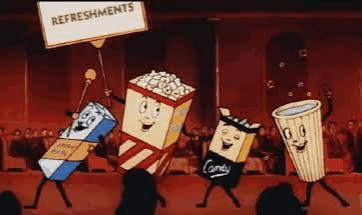
Movies are back. The leading man may be destined to dance with angels and ghosts, but the dawn of the director is upon us. So grab your popcorn, pick a seat, and enjoy the show.

