Let’s talk about cancel culture. Cancel Culture is a very real thing, I’m not going to deny that. Cancel Culture does apply to certain things such as the near-blacklisting of Colin Kaepernick, the firing of James Gunn, and the current fight against Christian rapper Lecrae. Cancel Culture is when society cancels a figure, movement, or item because of a disagreement rather than from a place of accountability. Cancel Culture affects both sides of the political aisle and is very real, but it is not the purpose of this article. Instead, I’d like to focus on social accountability as that is what we’ve seen get heavily mislabeled and meme’d this past week.
Potato Head
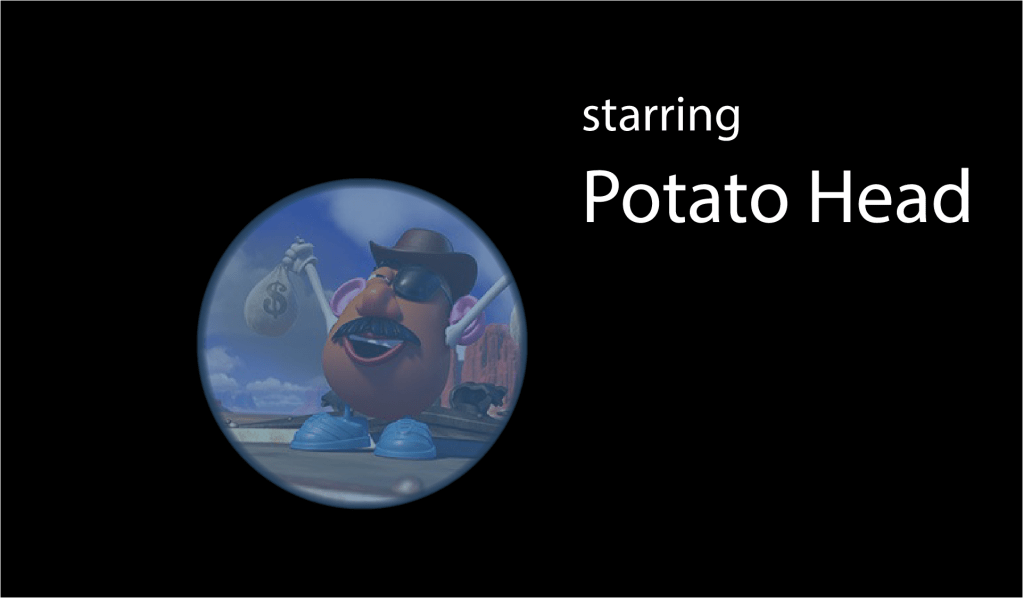
Let’s start with the easy one. This past week, Hasbro announced that the Mr. and Mrs. Potato Head brands would cease to be independently marketed and would instead by released under the same label of Potato Head. They merged two products under a single title, though both Mr. and Mrs. Potato Head are still available for purchase in their regular form. That’s it, that’s all Hasbro did. They didn’t receive petitions from a social group or face demands, they didn’t make some “woke” statement or take an axe to the Potato Head products, they didn’t start packaging Mrs. Potato Head’s eyes with Mr. Potato Head’s mustache; they simplified their marketing by making a fairly typical product decision. And the internet went nuts.
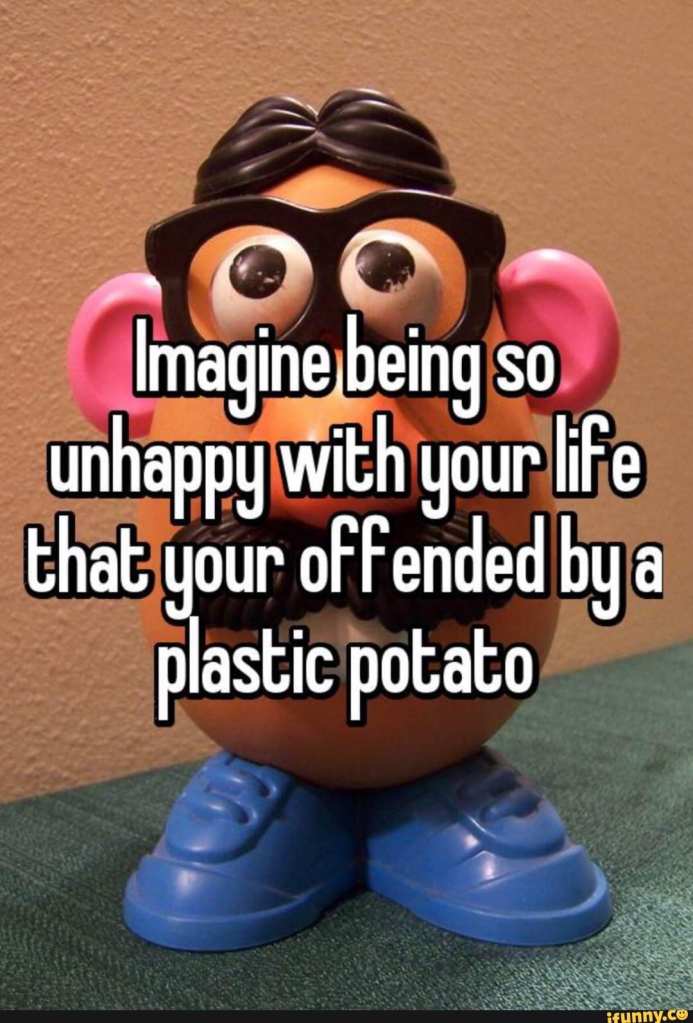
I’ve seen this meme ALOT on Facebook in the past week and the irony is baffling. Hasbro made a decision that will let them make more money. They didn’t make a decision because of any perceived offense, and the only people being currently offended by a plastic potato are the ones posting this meme without a shred of self-awareness. So in turn, people are trying to cancel a company and a product because said company cancelled a product that they didn’t actually cancel. This isn’t social accountability, this is vitriolic cancel culture once again riled up by the unregulated toxicity of social media.
So, let’s talk about real social accountability.
Dr. Seuss
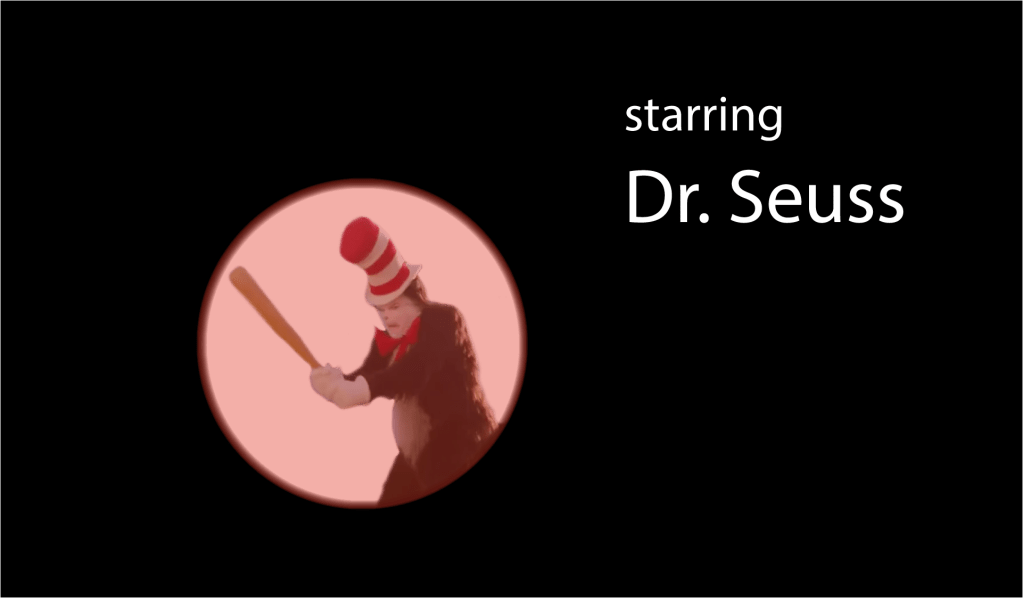
“Dr. Seuss is being cancelled!”, screamed about a dozen factually inaccurate clickbait articles and videos. The outrage began when an east coast school district decided that it would no longer promote the Dr. Seuss’ penned children’s books for “Read Across America Day”, which is commonly associated with the author’s birthday. This is an association I can recall from my grade school days as I remember his 100th Birthday being a major celebration for me at Hopewell Elementary. The district decided that because of certain problematic works and the views held by Geisel in his adult cartooning work, which was peppered with intense racist depictions of both Japanese and African Americans, that perhaps he wasn’t the paragon of humanity that kids should look up to. The district didn’t remove his books from display, they didn’t refuse kids the right to read them, they simply chose not to promote them.
This was followed by an announcement from the deceased author’s corporation in charge of his estate, Dr. Seuss Enterprises. In their statement, it was announced that publication of six Dr. Seuss works would cease. Again there was no government intervention or even citizen intervention. An independent company decided that keeping this books hot off the press was detrimental to the culture of their company and appropriate regard for their fellow men and women of color. These books can still be purchased through third parties, they can still be found in school and local libraries, they can still be kept digitally secure on your Kindle. They aren’t going anywhere, and the remainder of Seuss’ vast catalogue of children’s books are untouched. Dr. Seuss’ works are as alive as ever.
What we witnessed was a corporation holding themselves accountable and acknowledging the shortcomings of a very influential author. People are not perfect, nor should we expect them to be and this kind of accountability keeps them from doing harm to someone by putting negative or blatantly racist thoughts into the impressionable minds of children. Simply put, the publishers don’t want children of color seeing themselves portrayed as racist caricatures. Yet, this was still blasted as “Cancel Culture” and people lost their minds. Why?
Accountability
What we’re witnessing every time an event like this occurs is an uncomfortability with the notion of accountability. Watching a legendary figure like Dr. Seuss be reckoned with due to his errancies conflicts with our idea of American Exceptionalism. In short, we do not like being told that we are wrong. And when challenged to rethink the influences on our life and reflect on how they may have impacted our own world view, we simply unplug our controller and return home. When the game gets tough, we decide that we’d just rather not play.
But if we are to ever achieve any kind of harmony, be it across political, cultural, racial, or even national lines, we have to be vigorous about holding each other accountable. Accountability does indeed produce cancellation, but it comes from a place of reconciliation and growth rather than disagreement and willful blindness. The cancellation of these six books allows for parents, teachers, and children to have meaningful conversations about how and why what we say and do matters. This conversation allows all of us to explore how the greatness of a man’s works doesn’t excuse its fallacies nor do those fallacies wipe away the greatness of his works.
The Fullness of Dr. Seuss
Dr. Seuss was a vibrantly political and socially critical writer. However, history has shown us that he was not always right. In fact, some times he was offensively and dangerously wrong. This expurgation of his catalogue helps illustrate that. So while we can champion the ideas of The Cat in the Hat providing reading-level appropriate stories to lift children out of illiteracy, we can understand that not everything that he presented was appropriate in its social connotations.
And while we praise the ways that The Sneetches spoke out against the holocaust and Anti-Semitism, we must also acknowledge that Geisel’s views of internment camps and his racist stereotyping of the Japanese were equally foul and immoral. He didn’t kill millions of Japanese in the way that millions of Jews were pogromed, but the sentiments of hatred share the same seed.
The actions taken in the past week ensure that those seeds don’t receive the foul nutrients they need to ever grow into true hatred, like that which stirred the holocaust, the internment camps, and hundreds of years of African enslavement. By reckoning with our past, holding accountable the improper ideals we as a country and as a culture have held, we can prevent them from taking place again in the future. That’s what this is about, paving the way for a more enlightened and fairly represented society.
A Culture of Accountability
We need to be comfortable with cultural accountability. It is what keeps us moving in the right direction, and what allows the unheard and the minority to utilize their voice and have an equitable seat at the table. It might be uncomfortable to learn that the first author you ever read thought of Japanese people as viscous killers, but imagine how a Japanese child might feel finding that out while they read one of his books. It sucks knowing that the man behind the TV show I watched nightly reruns of with my best friend turned out to be a serial rapist. But the work doesn’t excuse the moral failures. They should be challenged and when need arises, be cancelled; if that’s what it takes to create a more equitable and respectful society.
 Collin Willis